What Is Cricket and How to Play It: Rules, Formats, and Basics
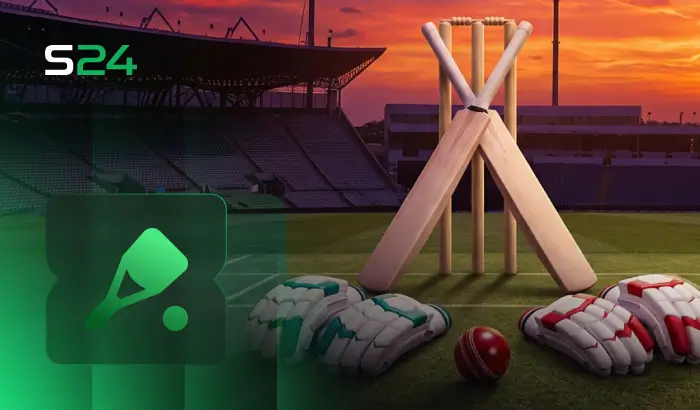
Cricket – is a team sport played with a bat and ball, where two teams of 11 players each take turns playing offense and defense. The main objective – is to score more runs than the opponent within the allotted time or number of overs.
If one tries to describe cricket in simple terms, it is a game where one player bowls the ball, another bats it, and the opposing team tries to prevent scoring or get the player out.
Essence of the Game in Cricket
The essence of cricket lies in the confrontation of two roles:
- the batting team (hitting the ball with the bat) aims to score runs;
- the fielding team (bowling and fielding) tries to stop the opponent.
The player with the bat (batsman) hits the ball and runs between the wickets (a structure of stumps and bails) to score runs. Meanwhile, the opponents catch the ball and try to return it to play as quickly as possible.
Important: teams switch roles after completing their attempt (innings).
Objective of the Game in Cricket
The main objective in cricket – is to score more runs than the opposing team.
Runs are awarded:
- for running between thegoals;
- for shots after which the ball reaches the boundary of the field.
Meanwhile, the defending team tries to:
- get the batsman out (make an out);
- limit the number of runs scored.
A typical play looks like this: a player hits the ball delivered by the opponent with a bat and runs between the wickets, earning runs while the opponents try to stop him.
In simple terms: cricket – is a strategic contest where it is important not only to bat well but also to defend skillfully, allocate roles, and control the flow of the match.
A Brief History of Cricket
The history of cricket begins in England and spans several centuries. Today, this game is considered one of the most popular in the world, especially in Asian countries and the former British Empire.
Where Cricket Originated
Answering the question of where cricket originated, most historians agree that the game emerged in southeastern England around the 16th century. Initially, it was played by children in rural areas, but over time, cricket became popular among adults as well.
By the 17th century, cricket began to develop actively as an organized sport, and in the 18th century, the first professional teams and official rules appeared.
How Cricket Developed
With the expansion of the British Empire, cricket spread worldwide. It began to be actively played in:
- India,
- Australia,
- South Africa,
- the Caribbean countries.
In the 19th–20th centuries, the game gained international status, and matches between national teams became an important part of sports culture. Over time, different formats of cricket emerged, making the game more accessible and diverse.
Why Cricket Became Popular
Today, cricket – is not just a sport, but a part of the culture in many countries. Its popularity is explained by several factors:
- the historical influence of Great Britain;
- the simple basic idea of the game;
- variety of formats (from fast-paced to multi-day);
- major international tournaments and leagues;
- a fan base in the sport of over 2 billion people.
Cricket is especially popular in India, where it is considered the number one sport and attracts a huge audience of viewers. The Indian Premier League (IPL) is the most expensive league in the world.
Thus, the history of cricket – is a journey from a simple village game to a global sport that unites millions of fans around the world.
Basic Rules of Cricket
The rules of cricket may seem complex at first glance, but the basic logic of the game is quite simple. A match involves two teams of 11 players each, who take turns playing offense and defense.
In short, the rules of cricket boil down to the following:
- one team bats and tries to score points (runs);
- the other team bowls and defends, trying to get the players out (make an out);
- after the attempt is completed, the teams switch roles.
How Many Players in a Team
Each team has 11 players. During a match:
- 2 players from the batting team are on the field (batsmen),
- the rest are ready to come in turn,
- the entire opposing team plays defense.
How a Match Proceeds
A cricket match is divided into parts called innings (also referred to as an inning, or innings).
During one innings:
- the team tries to score as many points as possible,
- the opponent tries to get 10 players out or limit the score.
The number of innings depends on the format of the match. We will explain the differences in a special section below.
How Points are Scored
Points in cricket are called runs. They can be scored in different amounts through various methods:
- Running between the wickets after a hit – from 1 to 4 runs depending on the number of runs completed.
- Sending the ball to the boundary with a bounce (4 runs).
- Hitting the ball over the boundary on the full (6 runs).
When a player is considered out
A player is considered out if:
- The ball hits the stumps (known as bowled in English-speaking countries).
- An opponent catches the ball on the full (caught).
- The player fails to reach the crease in time (run out).
- The ball hits the leg instead of the stumps (LBW).
Please note that this article provides only a basic explanation of the main rules. If you want to delve deeper, we recommend reading the detailed breakdown in the text Cricket Rules in Simple Terms. There you will find a step-by-step explanation of the game, examples, and analysis of numerous on-field situations.
Player Positions in Cricket
Positions in cricket determine the role each player performs during a match. There are 11 players in a team, and their tasks may change depending on the situation, but the main roles of players in cricket are divided into several categories.
Batsman
A batsman – is a player from the batting team who hits the ball with a bat and scores runs. His main tasks are:
- hitting the deliveries from the bowler,
- scoring runs through running,
- protecting his wicket.
During the game, there are two batsmen on the field at the same time, who take turns facing the deliveries.
Bowler
A bowler – is a player from the fielding team who delivers the ball to the batsman. Their objectives are:
- to dismiss the player (get them out) by hitting the wicket directly,
- to prevent the opponent from scoring many runs.
Bowlers use different delivery techniques to challenge the batsman.
Wicket-keeper
The wicket-keeper – is a specialized player from the fielding team who stands behind the stumps (wicket) behind the batsman. Their tasks are:
- to catch the ball after the delivery,
- to participate in dismissals,
- to quickly react to the batsman's mistakes.
This is one of the most crucial and reaction-demanding positions on the field.
Fielders
Fielders – are the remaining players of the fielding team who are positioned all over the field. Their task is:
- to catch the ball,
- to stop hits,
- to return the ball to the stumps as quickly as possible.
The strategic placement of fielders determines how many runs the opponent can score.
Each of the described positions complements each other and helps control the course of the match.
Cricket Formats
Cricket formats define how long a match lasts, how many deliveries (overs) the teams make, and the pace of the game. Today, there are several main formats that differ in duration and style.
In brief, there are three key formats:
- Test Series. Classic.
- ODI. One Day International.
- T20. Fast-paced.
Below is a table with the key differences of the formats. It provides a brief comparison. If you want to to delve deeper into the differences between formats, read the separate material Cricket Formats: Test, ODI, T20 – what is the difference.
Format | Duration | Number of Overs | Features |
Test | up to 5 days | no limits | The most challenging and strategically powerful format. Each team has two innings |
One Day International (ODI) | 7-8 hours | 50 | A more dynamic one-day format. Each team has one innings |
Twenty20 (T20) | about 3 hours | 20 | The fastest format. Easy to understand for beginners. Most professional leagues play in this format |
Cricket Field and Equipment
The cricket field and the equipment used in cricket – are crucial elements of the game that directly affect its course. Despite their apparent simplicity, each element has its own features and rules.
Field
The cricket field is circular or oval in shape. In the center is therectangular area – the pitch, where the main part of the game takes place.
Field features:
- boundaries along the edges, awarding additional runs,
- wickets located in the center,
- the surface can be grass or artificial
The size of the field is not strictly fixed, but its radius usually ranges from about 60–90 meters.
Wickets
The wickets, or wicket – are one of the key elements of cricket.
They consist of:
- three vertical stumps
- two bails on top
Wickets are set up at both ends of the pitch. The main task of the fielding team – is to hit the wickets to get the batsman out.
Bat and Ball
The main equipment for cricket – is the bat and ball. The bat is made of wood, has a flat side for striking, and is used by the batsman to hit the ball.
The ball is hard, covered with leather, and is usually red or white (depending on the format), used by the bowler for delivery.
Why Cricket is So Popular
Cricket – is one of the most popular sports in the world, uniting hundreds of millions of fans. Its popularity is explained by its history, geographical spread, and variety of formats.
Geography
Cricket is especially popular in countries where it developed under the influence of Great Britain. These regions include India, Pakistan, Australia, England, South Africa, and Sri Lanka.
In these countries, cricket – is not just a sport but an important part of the culture. For instance, in India, matches draw huge audiences, and leading players become national stars.
Tournaments
International competitions and professional leagues play a significant role in cricket's popularity. The most famous of these include:
- Cricket World Cups,
- national and international tournaments,
- popular T20 leagues.
Short formats, especially T20 cricket, have made the game more dynamic and spectacular, attracting a new audience.
Interest in the Game
Interest in cricket is linked to the fact that the game combines strategy and tactics, individual player skills, and the unpredictability of the outcome. Additionally, different formats of cricket allow for a convenient way to watch and predict .– from fast matches to long-lasting encounters. Now you know what cricket is, how the game is played, and its main essence. Cricket is a team sport where it's important not only to hit the ball but also to understand strategy, player roles, and the specifics of the match format.
In Brief:
- two teams of 11 players each participate in the game;
- the goal is to score more runs than the opponent;
- the match is divided into innings, and teams take turns batting and fielding;
- the outcome of the game depends on tactics, technique, and teamwork.
If you are just starting to understand this game, the next step – is to grasp the details. For this, we recommend reading our other articles dedicated to cricket. These materials will help you delve deeper into the game and confidently understand what's happening on the field.
FAQ
How does a play unfold in cricket?
The play begins with the bowler's delivery: he bowls the ball to the batsman, who hits it. After the strike, the players can run between the wickets to score runs, while the fielding team attempts to stop the ball or make an out.
What is an over in cricket?
Over – is a series of 6 consecutive deliveries bowled by one bowler. After each over, the bowler is changed.
How many overs are there in cricket?
The number of overs depends on the format:
- T20 – 20 overs
- ODI – 50 overs
- Test – unlimited
How many players are there in cricket?
In cricket, there are two teams of 11 players each. At any given time, there are 2 batsmen on the field along with the entire fielding team.
How long does a cricket match last?
The duration depends on the format:
- T20 – approximately 3 hours
- ODI – 7–8 hours
- Test – up to 5 days
How is cricket different from baseball?
In cricket, the field is circular, and players run between two points, whereas in baseball – around the bases. Additionally, in cricket, the delivery is bowled with a bounce off the ground, and the match can last significantly longer.
What is an innings in cricket?
Innings – is a period in which one team plays offense and scores points, while the other defends.
What does “out” mean in cricket?
An – is a situation when a batsman is dismissed from the game. This occurs, for example, if the wickets are hit, the ball is caught, or the player fails to complete a run in time.
What is a wicket in cricket?
A wicket – is a structure consisting of three stumps and two bails. This term is also used to describe the moment when a player is dismissed (out).
Can you play cricket with two players?
Full cricket is designed for teams of 11 players, but simplified versions can be played by two people or a small group.
How do you win in cricket?
The team that scores more runs than the opponent after completing all innings or overs wins.
Where is cricket popular?
How long does one over last in cricket?
One over lasts on average 3–5 minutes, depending on the pace of the game and the actions of the players.
What do 4 and 6 mean in cricket?
4 points are awarded if the ball reaches the boundary after bouncing. 6 points – if the ball crosses the boundary in the air.
Why is cricket so long?
Cricket can be lengthy due to the Test format, where a match lasts up to 5 days. This is due to the traditions and strategic depth of the game.
How can a beginner understand cricket?
To understand cricket, it's enough to know the basics: the objective – is to score more runs, one player bats, another bowls, and the teams take turns attacking and defending.