The symbolic team of the group stage of the 2026 World Championship
The group stage of the 2026 World Cup flew by in a single breath, giving us a plethora of bright moments and unexpected revelations. We closely followed each match and decided to compile our own symbolic team, which reflects the spirit of this tournament. And, to accommodate everyone who truly carried their teams into the playoffs, we chose an attacking 3-4-3 formation.
Goalkeeper
Vozinha (Cape Verde national team)
If you hadn't heard of him before the tournament, you will certainly remember him forever now. At 40, Vozinha made his World Cup debut and became the main hero of Cape Verde. In the first round match against the formidable Spaniards, the goalkeeper made seven saves and was named the best player of the match. At the end of the group stage, the keeper nicknamed "Grandma" recorded two clean sheets and helped the team directly advance to the playoffs. From being a complete unknown, Vozinha instantly became a global media star - his social media followers skyrocketed from 50,000 to 17 million. Perhaps, this is the most beautiful story of the World Cup so far.
Defenders
Pau Cubarsi (Spain national team)
Cubarsi is showing at this World Cup why he is considered the most promising center-back in the world. This guy's stats are simply astonishing: he played all 270 minutes, helped Spain go through the group without conceding a single goal and was second in the tournament for passing accuracy (over 98%!), averaging 5.3 interceptions per match. At 19, Cubarsi has become the defensive leader of "La Furia Roja", who both starts attacks with precision and defends superbly.
Virgil Van Dijk (Netherlands national team)
The Dutch captain, who not only assisted his partners in defense but also excelled in attack. A goal against Japan, an assist to Brobbi in the game against Tunisia, and 79% of duels won - Virgil has proven at the group stage of the World Cup that he remains the best in his business. And it's too early to write him off after a disappointing season with Liverpool.
Davinson Sanchez (Colombia national team)
We couldn't ignore the Colombia national team. The South Americans, who sensationally won Group K, didn't have a clear hero. Therefore, we chose Sanchez. Davinson is the backbone of the Colombians, allowing the team to concede only one goal in three games. Sanchez looked solid - he made no mistakes, covered his partners, and won almost all duels against opponents both on the ground and in the air.
Midfielders
Keito Nakamura (Japan national team)
The Japan national team pleasantly surprised at the group stage of the World Cup. They didn't suffer a single defeat, earning five points. The role of the leader was taken on by Nakamura. Keito recorded a goal and an assist in his tally,He made 9 involvements in strikes (5 of his own shots + 4 created opportunities for partners), and his dribbling rate was 71%. No one will be surprised if after this tournament, the Reims player moves to a top Premier League or La Liga club.
Weston McKennie (USA national team)
After Pulisic's injury, Weston became the main leader of the Americans. His strength lies in his phenomenal work rate and versatility. In each of the three games, McKennie was everywhere: he passionately intercepted balls, won duels, broke into the opponent's penalty area, and created opportunities for his partners. His activity in the middle of the field allowed the US team to confidently take first place in Group D.
Ismail Saibari (Morocco national team)
Saibari scored in all three group stage matches - a record for the Moroccan national team at World Cups. He distinguished himself in games against Brazil, Scotland, and Haiti, becoming a key player for the team alongside Hakimi. His bright performance in the group stage of the World Cup ensured Ismail a promotion this summer. Rumor has it, the PSV midfielder will continue his career in Bayern. The Germans will pay 55 million euros for Saibari.
Ousmane Dembele (France national team)
The current Ballon d'Or holder made a claim for a second consecutive Ballon d'Or after the group stage. The French national team winger has four goals and one assist to his name. In the match against Norway, which was central in Group I, Dembele scored a hat-trick - and did it very quickly. All three goals flew into the "Vikings'" net before the 32nd minute. According to Opta, this is the fastest hat-trick in World Cup history since 1954.
Forwards
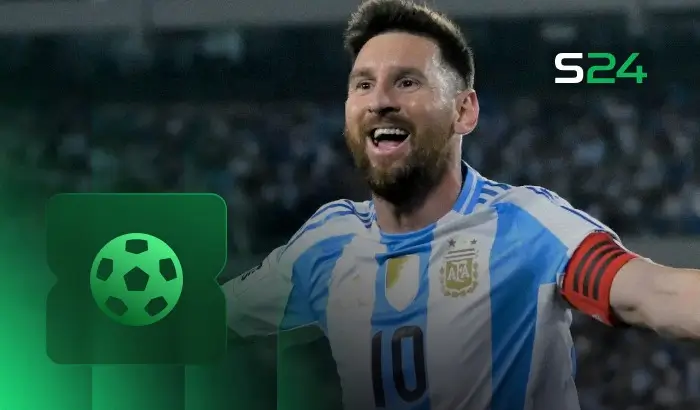
Lionel Messi (Argentina national team)
There's no need to explain Messi's presence in our symbolic team. Despite his age (Leo turned 39 during the tournament!), the football performed by the captain of Argentina is still something magical. He leads the list of the World Cup's top scorers with six goals and is a key figure in Scaloni's team tactics (he has the best key pass rate at the World Cup - averaging 3.2 per match).
Kylian Mbappe (France national team)
At the World Cup in the USA, Canada, and Mexico, we see the good old Mbappe. Kylian is the main catalyst for the French national team's attacks. Mbappe has already scored four goals and made two assists, showing incredible efficiency. According to Wyscout, he wins 68% of duels and averages 4.1 successful dribbles per match at the current tournament. If the Real Madrid forward maintains his current form, and the French reach the final, the long-awaited Ballon d'Or may finally be his.
Vinicius Junior (Brazil national team)
Vinicius is having his best tournament with the national team. He scored against Morocco, distinguished himself and assisted against Haiti, and also scored a double in the match against Scotland. The Brazilian reminds us of his 2024 form: he attracts two to three defenders, creating free zones for partners and literally forcing the defenseopponents panic with every shift from the flank to the center. With such a Vini, the "pentacampions" have a real chance at least for the semi-finals.
Head Coach
Lionel Scaloni (Argentina national team)
There are plenty of candidates for the best coach of the first part of the tournament. But we will choose Scaloni. Under his leadership, the "albiceleste" flawlessly passed the group round, scoring the maximum points in Group J with a total goal difference of 8-1. Scaloni has again done the most difficult thing - he has united all his stars around Messi. Argentina plays cohesively, organized, without failures in defense, hardly allowing their opponents to create anything. But most importantly - as a result of the group stage of the World Cup, Scaloni's team has become one of the main favorites of the tournament, receiving a fairly passable grid at least to the semi-finals.
FAQ
Who became the top scorer of the 2026 World Cup at the end of the group stage?
Lionel Messi. The forward for the Argentina national team scored six goals in three World Cup matches.
Who became the main sensation in the symbolic team and why?
One of the main sensations was the goalkeeper of the Cape Verde national team, Vozinha. The 40-year-old netminder played two "clean sheet" matches and made a large number of saves, which directly ensured his national team's advancement to the World Cup playoffs.
If a player performed well in the group stage, but his team was knocked out in the 1/16 or 1/8 finals, can he still be considered for a place in the final World Cup squad?
Perhaps, but the odds are lower. Everything depends on the context. If he performed admirably at the start of the playoffs and remained the team leader, then it's entirely possible.