What Is the UEFA Nations League: Format, Groups and Pots
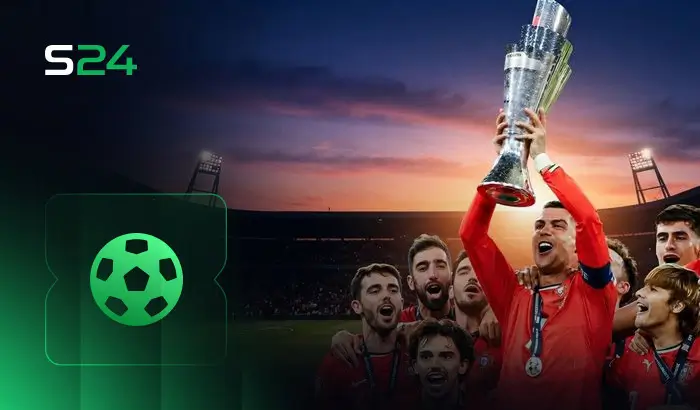
The UEFA Nations League is an official competition for European national teams, launched in 2018. Its main purpose is to replace some friendly matches with meaningful competitive fixtures, give national teams clear objectives and increase fan interest in international football. The new Nations League season starts on September 24, which makes this a good time to explain the main features of the competition.
Read the latest football predictions in the dedicated section of our website!
How the Nations League Format Works: Leagues, Groups and Match System
The tournament features 54 national teams that are members of UEFA. The teams are divided into four leagues — A, B, C and D — based on the ranking from the previous edition. League A is the top division, featuring Europe's strongest national teams such as France, Spain, Italy, Germany, Portugal and others. League D is the lowest level, where smaller football nations such as San Marino, Andorra and Gibraltar compete.
The group structure depends on the league:
- Leagues A, B and C each contain 4 groups of 4 teams. Every national team plays 6 matches: three at home and three away.
- League D consists of 2 groups of 3 teams. Every national team plays 4 matches.
Matches are played during so-called international windows — breaks in the club season set aside by UEFA and FIFA for national-team fixtures. The group stage is usually spread across the autumn, with rounds played in September, October and November.
Pots and the Draw: How Balanced Groups Are Created
To avoid unbalanced groups — for example, four favorites in one group and four outsiders in another — teams within each league are divided into pots before the draw. National teams with similar rankings are placed in the same pot. Leagues A, B and C each use 4 pots, while League D uses 2.
The draw mechanism is simple: one team is drawn from each pot to form a group. As a result, each group contains national teams from four different levels, from stronger to weaker sides. This does not guarantee perfectly even competition, but it helps protect the tournament from "groups of death" and clearly weak pools.
Playoffs, Promotion and Relegation: What Is Really at Stake
The group stage is only half the story. After that comes the most important part: the fight for the title, promotion and survival.
League A — the route to the title. Group winners and runners-up advance to the playoffs. The ties are determined by a draw and are played over two legs — home and away. The four quarter-final winners advance to the "Final Four": the semifinals, third-place match and final are all played at one venue over several days. The winner of the final becomes the Nations League champion.
Promotion and relegation. In Leagues B, C and D, group winners are promoted to the league above. For example, a team that wins a League B group starts the next edition in League A. Teams finishing last are relegated. This creates genuine motivation: even a League C national team is not simply playing for points, but for the chance to face top teams in the next edition.
Promotion/relegation playoffs. Not everything is decided solely by final group position. UEFA has added playoffs — extra matches between teams that finish on the boundary between divisions. For example, third-placed teams in League A play playoffs against second-placed teams from League B. The winner stays in the higher division or earns promotion, while the loser is relegated. This keeps the competition tense until the final round: even third place in a group can become a ticket to League A or send a team down.
The Nations League and Euro Qualification: What Is the Connection?
The Nations League is not simply a standalone trophy. It is directly connected with qualification for the European Championship and other major tournaments.
Here is how it works. After the Euro qualifying campaign ends, some national teams do not qualify directly. However, they still have a second chance through Nations League playoffs. UEFA selects teams that performed well in the Nations League but failed to qualify for the Euros through the regular qualifying process, giving them the opportunity to compete for the remaining places in additional playoffs.
This means that even a League C or D team that is objectively below the top level can theoretically qualify for the Euros — if it wins its Nations League group and then successfully gets through the playoffs. A real example is Georgia, which reached Euro 2024 for the first time in its history through Nations League playoffs. For a smaller football nation, it was a historic achievement made possible by this competition.
Odds to Win the Nations League in the 2026/2027 Season
National team | Odds to win the Nations League |
France | 3.80 |
Spain | 4.00 |
Germany | 5.50 |
England | 5.50 |
Portugal | 9.00 |
Netherlands | 15.00 |
Belgium | 17.00 |
Norway | 17.00 |
Italy | 35.00 |
Denmark | 35.00 |
Croatia | 50.00 |
Turkey | 100.00 |
Serbia | 100.00 |
Greece | 125.00 |
Czech Republic | 150.00 |
Wales | 150.00 |
* The odds are approximate, may vary between sportsbooks and are current at the time of publication.
FAQ
What is the UEFA Nations League and why was it created?
It is a competition for European national teams designed to replace some "empty" friendlies with genuinely meaningful matches. The Nations League also provides additional routes to the Euros and other major tournaments, giving even non-elite teams a reason to compete until the end.
How many teams play and how are they divided into leagues?
The tournament features 54 national teams. They are divided into four leagues — A, B, C and D — based on the ranking from the previous edition. Leagues A–C have 4 groups of 4 teams, while League D has 2 groups of 3 teams.
How are group-stage matches played?
They use a round-robin format: every team plays every other team twice, once at home and once away. In Leagues A, B and C this means 6 matches, while in League D it means 4.
What happens after the group stage?
In League A, the best teams reach the playoffs: group winners and runners-up play two-legged quarter-finals, after which 4 national teams advance to the "Final Four". In the other leagues, group winners are promoted and bottom-placed teams are relegated. There are also promotion/relegation playoffs that provide an additional chance to move up or stay in the division.
How is it decided which league a national team will play in next time?
It is determined by the results of the current edition: group winners are promoted and last-placed teams are relegated. Playoffs provide additional opportunities for promotion or survival. The Nations League ranking also affects Euro qualification.
Does the Nations League affect Euro qualification?
Yes. Additional European Championship places are awarded through Nations League playoffs. Teams that do not qualify directly but perform well in the Nations League can enter those playoffs.
Who are considered the favorites for the Nations League in the new season?
The main favorites are top national teams such as France, Spain, England, Portugal and Germany.